
Post 2 of 12: Equipment Series for Wheelchair Users Who Want to Get Out Walking
The Problem
Standard wheelchairs are brilliant for pavements, shops, and smooth indoor surfaces. But take them onto gravel, grass, or woodland paths and things get tricky fast. You hit a rut, the front casters dig in, and suddenly your “accessible trail” feels anything but.
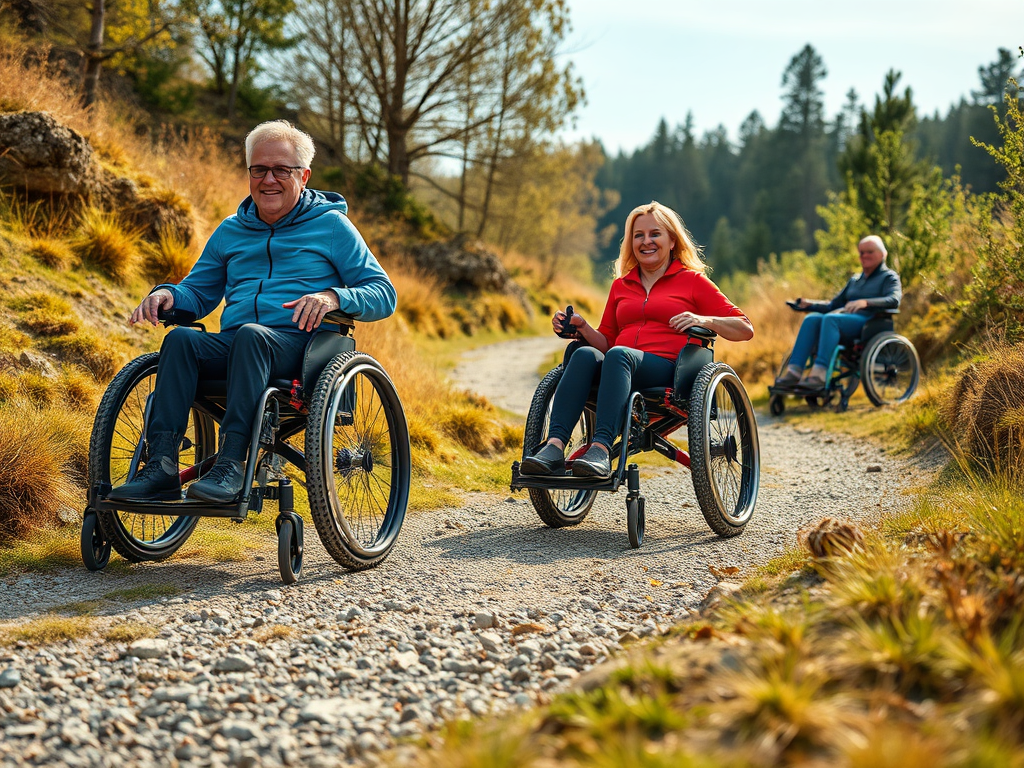
That’s where all-terrain wheelchairs and outdoor powerchairs come in. They’re built for bumps, slopes, and uneven surfaces, giving you more freedom to explore nature without needing a team of helpers or a perfectly paved path.
What Counts as “All-Terrain”?
There’s no single definition, but here’s what to look for:
- Chunky tyres with grip and puncture resistance
- Suspension systems to absorb shocks and keep you comfortable
- Powerful motors (for electric models) that handle slopes and soft ground
- Sturdy frames that don’t rattle or tip on uneven terrain
- Low centre of gravity for stability on hills or cambers
Some chairs are manual with mountain-bike-style wheels. Others are fully motorised, with joystick control and serious torque. Some even have tracks instead of wheels, like mini tank chairs, for extreme terrain.
Manual vs Power: What’s Right for You?
Manual all-terrain wheelchairs are great for short outings or assisted use. They’re lightweight, easier to transport, and often foldable. You’ll find models like the Mountain Trike or Trekinetic, which handle gravel and grass well but may need a strong pusher or companion on rough ground.
Outdoor powerchairs, on the other hand, are ideal for solo users or longer distances. They handle slopes, mud, and uneven terrain with ease thanks to deep-tread tyres, built-in suspension, and powerful motors. Models like the Magic Mobility Extreme X8, TerrainHopper, or TracFab offer joystick control and serious off-road capability, but they’re heavier, bulkier, and often need an adapted vehicle for transport.
If you’re choosing between them, think about terrain, distance, transport, and whether you’ll have support on the day. Powerchairs offer independence; manual chairs offer flexibility.
Where to Try or Hire
You don’t have to buy to try. Here are some places that offer hire options:
- Dalby Forest, North Yorkshire – Mountain Trike hire
- Queen Elizabeth Forest Park, Aberfoyle – All-terrain scooter hire
- Whinlatter Forest, Lake District – Tramper hire via Countryside Mobility
- Sandhaven Beach, South Shields – Power beach wheelchair hire
- Tentsmuir Forest, Fife – Manual beach wheelchair available
- Castlewellan Forest Park, County Down – Accessible scooter hire
- Avondale Forest Park, County Wicklow – All-terrain access via new treetop walk
Always check ahead of time, as some sites require booking, and availability can vary seasonally.
Planning Tips
- Check the terrain before you go. AccessAble and council websites can help
- Bring a repair kit or puncture sealant if you’re going off-road
- Know your battery range (for powerchairs) and plan for charging
- If you’re hiring, ask about transfer aids, hoists, or support staff
- Pack comfort items, cushions, waterproofs, and snacks; they make a big difference
Summary and What You Can Expect
All-terrain wheelchairs and outdoor powerchairs open up trails, beaches, and countryside paths that standard wheelchairs can’t handle. They’re not one-size-fits-all, and they’re not cheap, but they’re game-changers for disabled walkers who want to explore beyond the pavement.
Manual chairs are great for assisted outings and lighter terrain. Powerchairs are ideal for solo use and rougher ground. Both can be hired at select locations across the UK and Ireland, so you can try before you commit.
Coming up next
Beach Wheelchairs & Sand-Friendly Kits, how to get onto the sand without sinking, and where to hire across the UK and Ireland.
Feel free to share your story, your tips.
Explore more with us:
- Visit Gwenin for a curated selection of frameworks
- Browse Spiralmore collections
- Read our Informal Blog for relaxed insights
- Discover Deconvolution and see what’s happening
Relentless. Results-driven. Remote-ready.
I manage multiple live websites, numerous publications, and patents – delivering research, strategy, and commercialisation expertise.
 Access Trails UK