

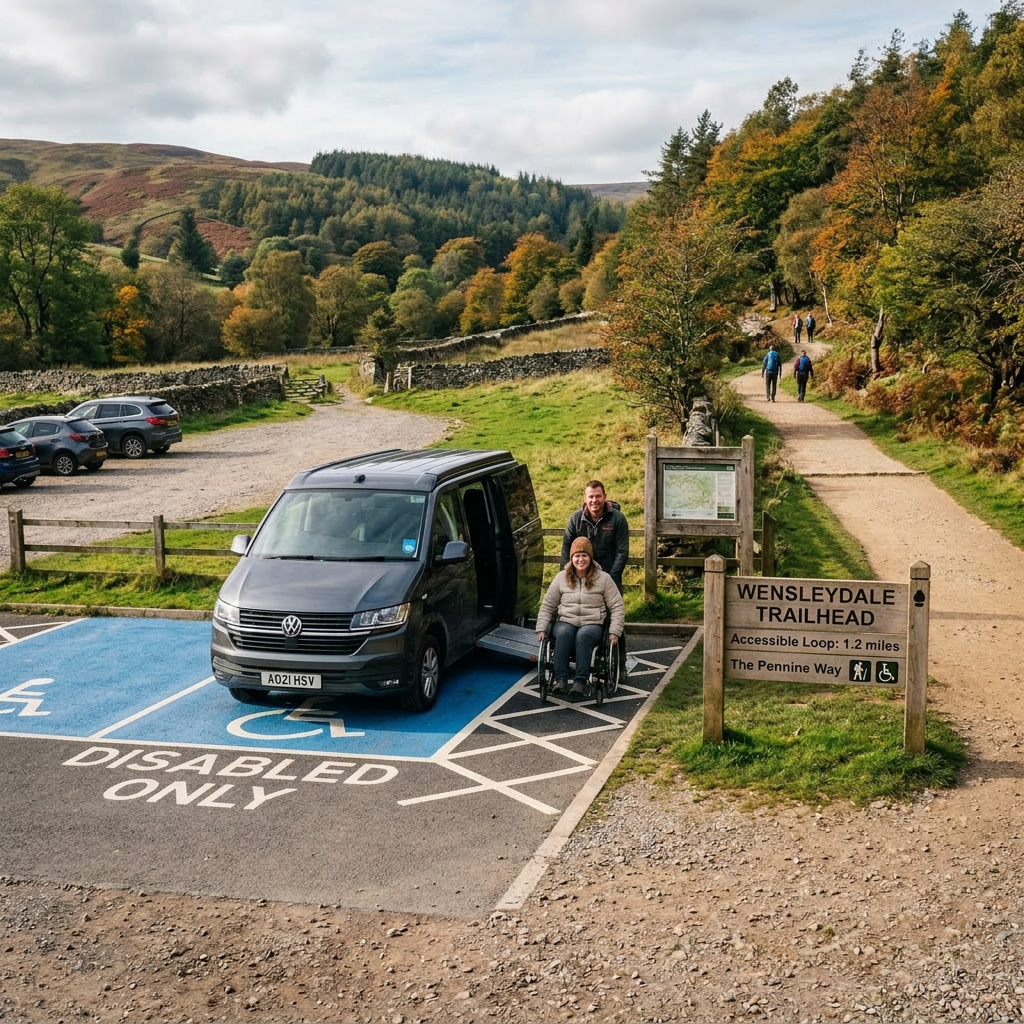
Accessible parking is a key part of planning any walk, especially for wheelchair users, mobility scooter users, and people with reduced mobility. Even a fully accessible walking route can become difficult if parking is too far away or poorly designed.
This guide explains how to find accessible parking for walking routes in the UK and what to check before you arrive.
Why Parking Impacts Accessibility
Parking is often the first and last part of any walking experience. Poor parking access can create barriers before the walk even begins.
Accessible parking affects:
- Distance from the car park to the trail
- Ease of transferring from the vehicle to the path
- Safety when unloading mobility equipment
- Overall energy required before starting the walk
Step 1: Look for Blue Badge Parking Spaces
Blue Badge parking is the primary indicator of accessible parking provision.
Check for:
- Wider parking bays for easier entry and exit
- Spaces located close to entrances or paths
- Level ground for safe transfers
- Clearly marked accessible bays
Not all car parks offer equal accessibility, so location matters.
Step 2: Check Distance From Parking to Walking Route
Even accessible bays may be too far from the actual walk.
Look for:
- Parking within a short, step-free distance to the path
- No long slopes between the car park and the trail start
- Direct access points without detours
Long transfers can significantly reduce accessibility.
Step 3: Use Official Parking Information Sources
Reliable parking information is usually found on:
- Local council websites
- National Park visitor pages
- Country Park official sites
- Managed attraction websites
These sources often include:
- Parking layout maps
- Accessibility notes
- Height restrictions
- Surface conditions
Step 4: Check Vehicle and Access Restrictions
Not all car parks are suitable for all vehicles or users.
Be aware of:
- Height barriers for larger vehicles
- Narrow entrance points
- Limited turning space
- Seasonal closures or restricted hours
These can affect accessibility even when spaces are available.
Step 5: Look for Alternative Access Points
Some walking routes have multiple entry points.
Better options include:
- Secondary entrances closer to paths
- Drop-off points near trailheads
- Access via nearby streets or promenades
- Multiple small car parks instead of one large hub
Final Thoughts
Accessible parking is a major part of planning any walk. Choosing locations with close, step-free parking access helps ensure a smoother and more accessible experience from the very beginning.