
A look at signage that supports disabled walkers and the baffling ones that deserve their own comedy sketch
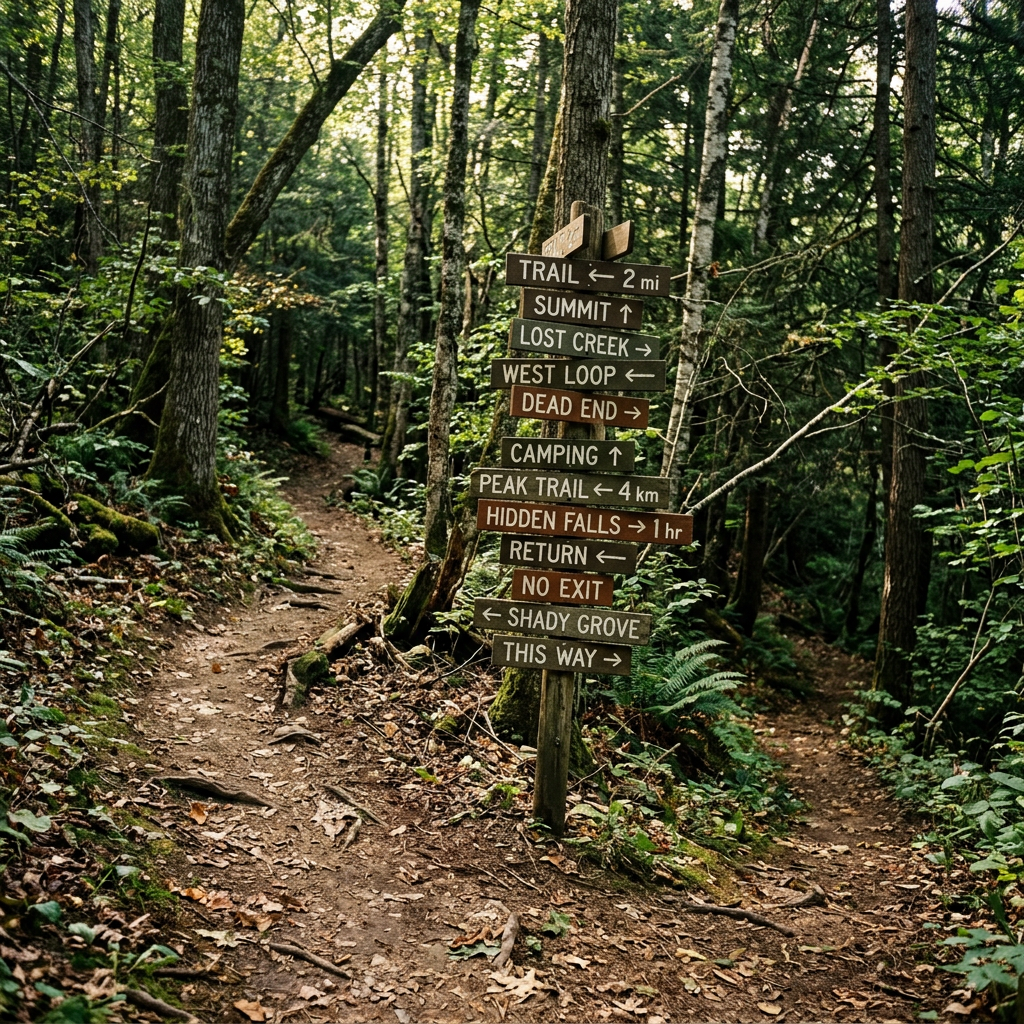
Trail signs can be glorious. They can guide, reassure, and invite. But they can also confuse, mislead, or make you snort into your flask. For wheelchair users, signage isn’t just decoration; it’s access. It tells us where we can go, how far we’ll get, and whether there’s a loo that doesn’t require a grappling hook.
This post celebrates the signs that get it right and gently mocks the ones that make us wonder if someone swapped the map for a riddle.
Signs That Actually Help
- Surface type listed clearly: “Tarmac path for 1.2km, then compacted gravel” = useful. “Natural surface” = vague poetry.
- Gradient info with numbers: “Max gradient 1:12” = helpful. “Steep in places” = interpretive dance.
- Toilet icons with detail: Radar key symbol, transfer space noted, Changing Places logo if relevant.
- Rest stop markers: Benches every 500m, picnic spots with turning space, shade options.
- Step-free route arrows: Especially when they’re not just a detour but a dignified alternative.
- Trail length with pacing notes: “Loop trail, 2.5km, average time 45 mins with rest stops” = gold.
These signs say: “We thought about you. We want you here. We respect your rhythm.”
Signs That Deserve Their Own Comedy Sketch
- “Easy walk” with no mention of steps, slopes, or surface. Easy for whom? A mountain goat?
- “Accessible toilet available” with no location, no key info, and no guarantee it’s not behind a locked café.
- “Short loop” that turns into a gravel maze with a stile at the end. Surprise!
- “Suitable for pushchairs” as a stand-in for wheelchair access. Pushchairs don’t need turning space or transfer zones.
- “Natural trail experience” = mud, roots, and existential dread.
- “Benches available” with no indication they’re up a hill, on a slope, or made of decorative stone shaped like a hedgehog.
These signs say: “We tried. Sort of. Good luck.”
What Disabled Walkers Actually Need from Signs
- Clarity: surface, slope, distance, toilets, rest stops
- Honesty: if it’s rough, say so, don’t wrap it in euphemism
- Respect: show us we’re expected, not just accommodated
- Detail: not just “accessible”, tell us how
- Consistency: don’t make us decode a new symbol every time
Good signage is access. It’s dignity. It’s the difference between rolling with confidence and turning back with frustration.
Final Thought
Trail signs aren’t just wayfinding, they’re storytelling. And disabled walkers deserve signs that tell the truth, offer support, and maybe even make us smile. So, here’s to the signs that say, “you belong here” and to the ones that make us laugh, roll our eyes, and write cheeky blog posts.
Feel free to share your story, your tips.