

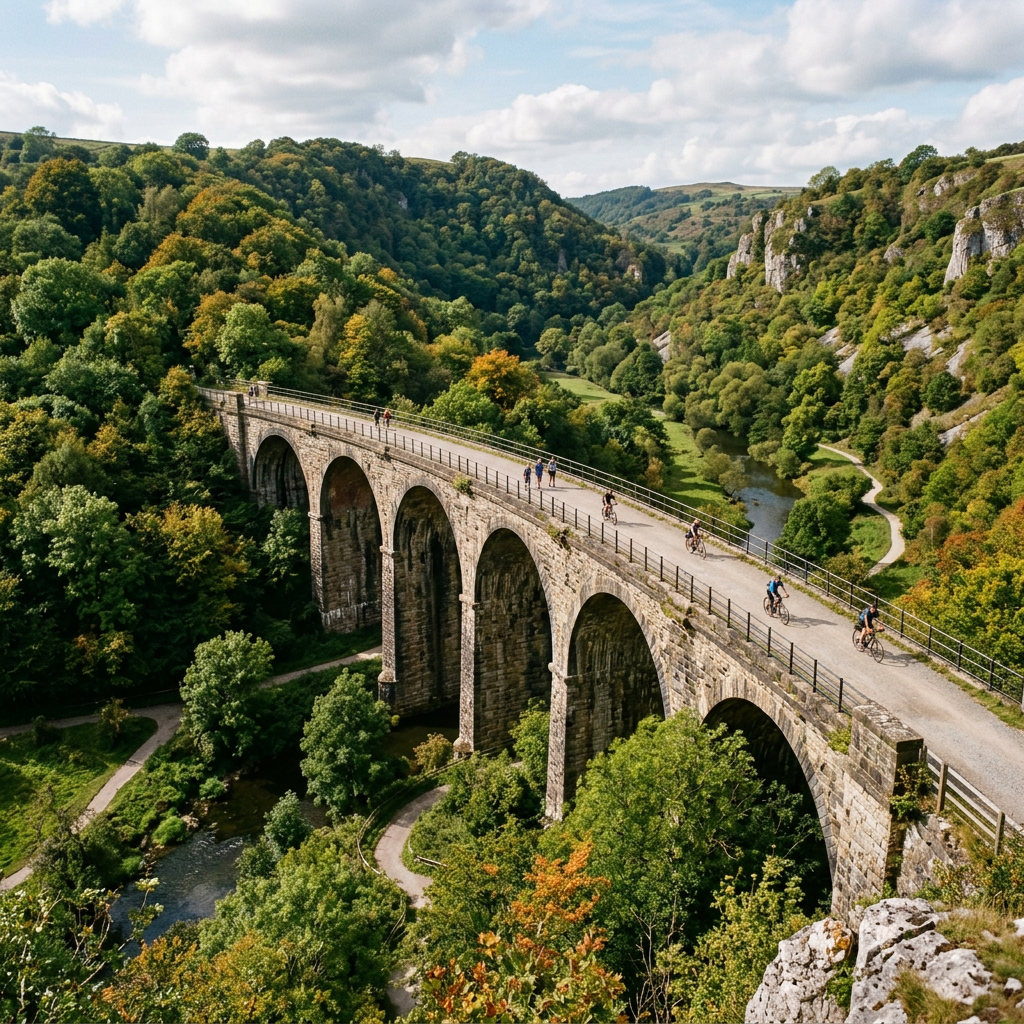
The Peak District National Park is often considered the UK’s first national park and, in many ways, one of its most accessible. While it includes rugged moorland and limestone edges, it also offers an unusually high number of flat trails, converted railways, accessible reservoirs, and well-supported visitor hubs.
This combination makes it one of the strongest choices in England for accessible outdoor exploration.
Why the Peak District Stands Out
Compared to other UK national parks, the Peak District has:
- More accessible “traffic-free” greenways
- Repurposed railway lines with gentle gradients
- Well-developed visitor centres
- Accessible reservoirs and waterside paths
- Good public transport links from cities like Manchester and Sheffield
- A wide range of short, low-effort scenic routes
It’s not “flat”, but it is structured for access in a way many upland parks are not.
Best Accessible Locations in the Peak District
Monsal Trail (Flagship Accessible Route)
The Monsal Trail is one of the most important accessible routes in the UK.
What makes it stand out:
- Fully traffic-free walking and cycling route
- Smooth, compact surface suitable for wheelchairs
- Converted railway line = gentle gradients
- Tunnels and viaducts with dramatic scenery
- Multiple entry points with parking
It runs through spectacular limestone dales without requiring steep climbs.
Tissington Trail
Another converted railway route, the Tissington Trail, offers:
- Long, wide, even surface
- Accessible countryside views
- Gentle inclines throughout
- Easy access from towns like Ashbourne and Buxton
It’s quieter than Monsal in many sections, making it ideal for a more peaceful experience.
Ladybower Reservoir
One of the most accessible scenic water landscapes in the Peak District.
Visitors can enjoy:
- Flat reservoir-side viewpoints
- Accessible parking areas
- Firm paths near the dam
- Dramatic valley scenery
- Iconic “flooded forest” views in low water periods
It’s one of the easiest places to experience the scale of the park without rough terrain.
Derwent Valley & Visitor Centres
The Upper Derwent Valley offers:
- Accessible visitor facilities
- Smooth paths near reservoirs
- Wildlife spotting opportunities
- Flat valley-floor geography compared to the surrounding moors
It’s also one of the best-supported areas for accessibility services.
Castleton (Village Access Point)
Castleton is a classic Peak District village with:
- Relatively flat central areas
- Accessible cafés and shops
- Castle viewpoints (some uneven but optional)
- Nearby show caves (access varies by site)
While the surrounding hills are steep, the village itself is manageable.
Accessible Attractions & Experiences
Show Caves (Speedwell & Blue John Cavern)
Some underground attractions offer guided access, including:
- Step-free or assisted entry sections (varies by cave)
- Structured tours
- Handrails and lighting
- Unique geological experiences
Accessibility varies significantly, so checking in advance is essential.
Scenic Drives
The Peak District is one of the UK’s best parks for car-based scenic exploration:
- Snake Pass (weather dependent)
- Winnats Pass (spectacular limestone gorge views)
- Hope Valley routes
Many of the best views are visible directly from the road.
Nature Without the Strain
Accessible wildlife and scenery include:
- Herdwick and moorland sheep
- Red deer (occasionally in quieter areas)
- Birds of prey over valleys
- Reservoir birdlife (ducks, geese, waders)
- Limestone flora in dales
Much of this can be seen from trail edges, reservoirs, and greenways.
Accessibility Strengths
The Peak District benefits from:
- Converted railway infrastructure
- High-quality maintained trails
- Frequent benches and rest points on popular routes
- Strong signage and visitor information
- Good café and facilities coverage in key valleys
It is arguably the most “designed for visitors” national park in England.
Accessibility Challenges
Despite its strengths:
- Moorland areas can be steep and exposed
- The weather can change quickly on higher ground
- Some popular villages have cobbled or uneven streets
- Parking fills quickly in peak seasons
- Not all “short walks” are truly accessible
The key is choosing valley-based routes rather than upland edges.
Practical Tips for Visiting
Focus on valleys, not peaks
Accessible highlights are mostly in:
- Monsal Dale
- Hope Valley
- Derwent Valley
Use trailheads strategically
Most trails have multiple entry points with parking.
Avoid peak weekend times
Monsal and Ladybower can become very busy.
Check tunnel access
Some tunnels on trails may have lighting variations or closures.
Best Time to Visit
- Spring: waterfalls and greenery at peak freshness
- Summer: long daylight but busy
- Autumn: colour in dales and woodland edges
- Winter: atmospheric but limited services in some areas
Final Thoughts
The Peak District is not the most dramatic national park in the UK, but it may be the most practically accessible for everyday visitors.
Its strength lies in infrastructure: converted railways, accessible reservoirs, and well-managed valleys that allow people to experience countryside landscapes without needing to climb into them.
If the Highlands are about scale and wilderness, the Peak District is about accessibility through design.
Accessibility Rating: ★★★★☆
Best For: Traffic-free trails, reservoir views, gentle cycling/walking, and accessible countryside exploration.