

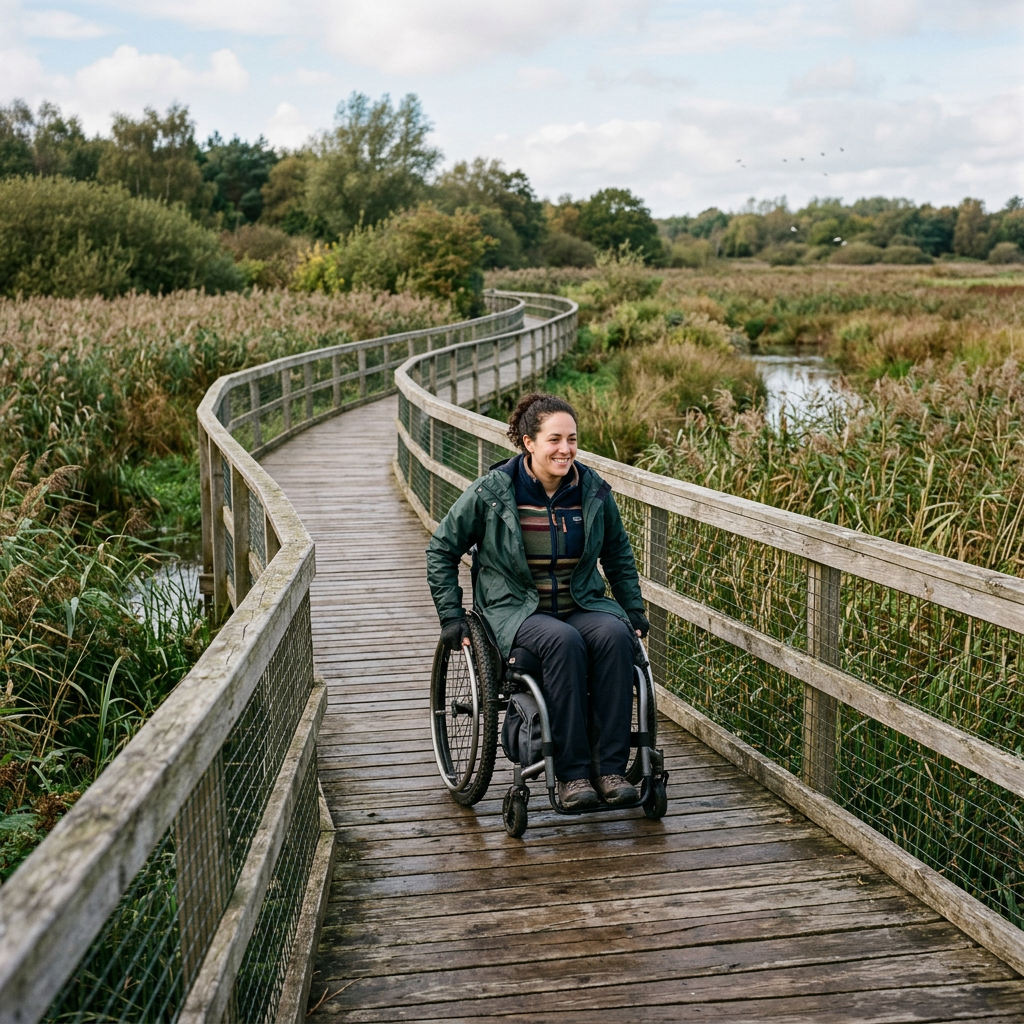
Nature walks in the UK are often associated with uneven terrain, woodland paths, and rural trails, which are not always accessible. However, many managed nature reserves and conservation areas now include accessible routes designed for wheelchairs, mobility scooters, and pushchairs.
This guide explains how to find genuinely accessible nature walks in the UK.
Why Nature Walk Accessibility Varies
Natural environments are less controlled than urban or coastal areas.
Accessibility is affected by:
- Soil and ground conditions
- Weather changes and seasonal mud
- Tree roots and uneven terrain
- Lack of maintained surfacing
- Conservation restrictions on path development
Because of this, route selection is especially important.
Step 1: Choose Managed Nature Reserves
The most accessible nature walks are found in managed sites.
Look for:
- National Nature Reserves
- Wildlife trusts and conservation parks
- Managed forest parks
- Visitor centre-led walking routes
These areas often include maintained paths and facilities.
Step 2: Look for Boardwalks and Firm Trails
Accessible nature walks usually rely on constructed paths.
Prefer:
- Wooden boardwalks
- Compact gravel paths
- Hard-packed earth trails
- Reinforced viewing platforms
These provide stability and reduce surface variation.
Step 3: Avoid Unmanaged Woodland Trails
Many woodland paths are not accessible in practice.
Avoid:
- Natural forest tracks
- Root-covered trails
- Narrow countryside footpaths
- Soft ground routes after rain
These conditions change frequently and can become unsuitable.
Step 4: Check Facilities and Accessibility Support
Well-managed sites often include additional support.
Look for:
- Accessible toilets
- Visitor centres with route maps
- Designated accessible routes
- Rest areas and benches
These improve usability and comfort.
Step 5: Check Seasonal Conditions Before Visiting
Nature walks are highly weather-dependent.
Be aware that:
- Rain can turn paths muddy and unstable
- Autumn leaves can hide uneven ground
- Winter frost reduces grip and safety
- Spring growth may narrow pathways
Final Thoughts
Accessible nature walks in the UK are best found in managed reserves and conservation areas with maintained paths. Careful selection and awareness of seasonal conditions are essential for a safe and enjoyable experience.