
A celebration of slow walkers, wheelers, and rest-takers with pacing strategies, rhythm rituals, and snack breaks as sacred.
In a world that prizes speed, disabled walkers know something precious: slow is not less. Slow is spacious. Slow is wise. Slow is where joy lives.
Whether you roll, stroll, pause often, or design your outing around benches and biscuits, your pace is valid. It’s not a compromise; it’s a choice. A design principle. A philosophy.
This essay is a celebration of slow trail pacing. Not as a workaround, but as a rhythm. A ritual. A radical act of disabled joy.
Why Slow Matters
Disabled walkers often move with companions due to fatigue, pain, sensory overload, or unpredictable terrain. But pacing isn’t just about managing limits. It’s about claiming pleasure.
When we slow down, we:
- Notice the robin’s song instead of rushing past.
- Catch the shimmer of sunlight on water.
- Rest before collapse and call it wisdom.
- Connect more deeply with our surroundings, with each other, with ourselves.
Slow is how we transform trails from endurance tests into belonging spaces. It’s our way of saying: “I’m here to enjoy, not to perform.”
Planning for Slow
Slow outings aren’t accidental; they’re crafted with care. A few planning secrets:
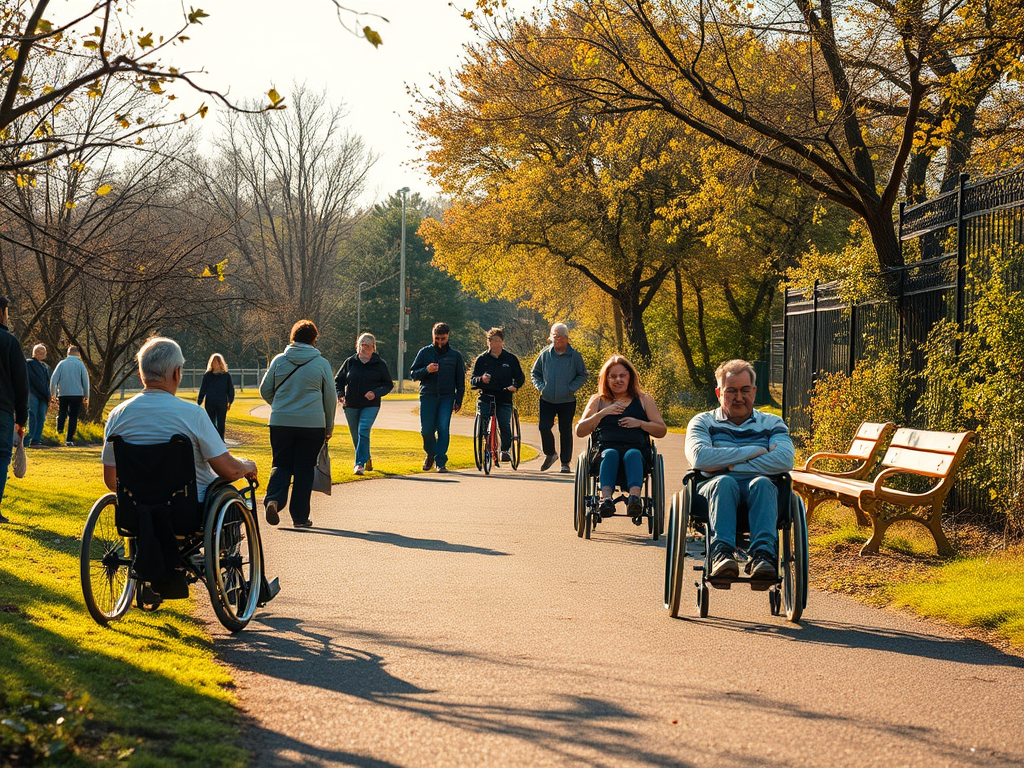
- Choose routes with rest stops: Benches every 500m, shade trees, or cafés nearby.
- Check surfaces and gradients: Loose gravel, boggy mud, and surprise hills are energy thieves. Smooth, gentle paths are allies.
- Build pauses into the plan: Stop not only when you’re tired, but when joy calls at viewpoints, by rivers, near friendly ducks.
- Double your time estimate: If a guidebook says 1 hour, think 2. Add a snack stop, then maybe a bonus one.
- Pack your pacing kit: Radar key, lap blanket, flask, comfort item (yes, a stuffed toy counts).
Planning for slowness isn’t a limitation. It’s liberation.
Rituals of Rest
Rest isn’t a detour. It’s the main event. Disabled walkers know how to rest with flair and dignity. Consider these rituals:
- Claim benches like thrones: Flask on one armrest, biscuit tin on the other. Call it trail royalty.
- Use natural pauses: Watch a squirrel hoard acorns, admire mossy walls, follow clouds.
- Celebrate the sit: Take a photo, jot a quick note, or breathe deeply. Mark it as a victory, not a delay.
- Rest early, rest often, rest proud: Don’t wait until you’re empty. Rest when you still feel good; it’s a superpower.
Rest is resistance. Rest is rhythm. Rest is access.
Pacing Strategies That Honour Joy
Slow isn’t passive; it’s creative. Here are strategies that make pacing playful:
- Loop trails with exits: Built-in options to turn back, shortcut, or pivot gracefully.
- Trail bingo: Spot benches, boulders, bins, birds, or toilets. Joy as a game.
- Snack breaks as sacred: Name them milestones. (“By the oak tree = flapjack time.”)
- Choose companion pacing wisely: Walk with people who match your rhythm, not rush it. A true friend waits for the bench selfie.
- Reframe goals: Not “finish the loop,” but “end with joy in the tank.”
Slow pacing isn’t about what you didn’t do; it’s about how you chose to be present.
Final Thought
Slow is a valid speed. It’s a design principle. A legacy. A love note to your body’s rhythm.
Disabled walkers are not outliers; we’re pace-setters. We remind the world that joy lives in the pause, the breath, the bench, the biscuit.
So, plan with care. Rest with pride. Roll with rhythm. And know that every slow outing is not a failure to go fast; it’s a masterpiece of disabled brilliance.
Feel free to share your story, your tips.