

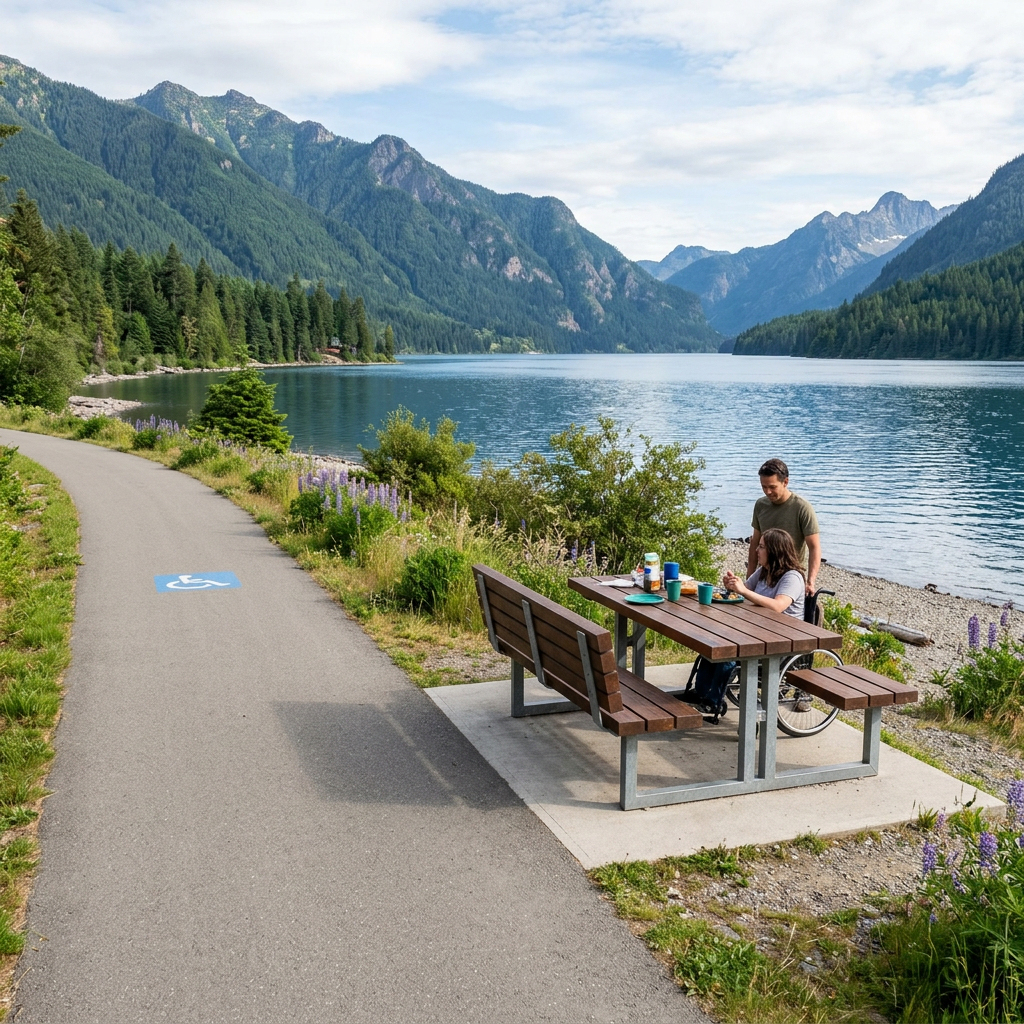
A guide to accessible picnicking benches, blankets, dignity setups, and squirrel-proof snack strategies.
Picnicking is more than a meal; it’s a ritual. A declaration that disabled joy belongs in public space. A moment of rest, nourishment, and quiet rebellion against the idea that we must always be moving, proving, or performing.
For disabled walkers, picnicking is access. It’s pacing. It’s a pleasure. It’s dignity with a sandwich in hand. And it deserves thoughtful design.
This essay is a celebration of picnicking with pride. A practical guide to claiming space outdoors with dignity, snacks, and a squirrel-resistant setup.
Choose Your Spot with Intention
Accessible picnicking starts with location. Think of it as stage design for joy. Look for:
- Benches with turning space: So, you sit beside, not behind. Equality is seating, not scenery.
- Flat approach: No gravel traps, surprise slopes, or kerbs that require a stunt team.
- Shade or shelter: Trees, gazebos, or a café awning, because comfort is part of access.
- Toilet proximity: Ideally, with a radar key and enough transfer space for real humans, not acrobats.
- A view worth pausing for: A lake shimmer, a duck comedy routine, or simply a quiet breeze-filled corner.
Claiming space isn’t an intrusion. Its inclusion.
Pack Your Dignity Kit
A good picnic is logistics disguised as leisure. The right kit turns “awkward” into “effortless.” Essentials include:
- Lap tray or anti-slip mat: For snacks, sketching, or squirrel diplomacy.
- Wipes & hand sanitiser: Dignity includes clean fingers and crumb-free hands.
- Radar key & toilet plan: Always pack one, even if you swear you “probably won’t need it.”
- Lap blanket or poncho: For warmth, weather defence, and dramatic picnic royalty vibes.
- Snack pouch or modular containers: Easy to open, easy to reach, and squirrel-resistant.
- Comfort item: A charm, photo, fidget, or stone, something grounding and joyful.
- Optional power move: A tiny flag to stake your bench like a monarch of leisure.
Reframe the Ritual
Picnicking isn’t just a break. It’s a statement. A ritual of belonging that says:
- “I deserve rest, nourishment, and beauty.”
- “I belong in this space, fully and unapologetically.”
- “Access includes pleasure, not just practicality.”
- “Disabled joy is valid, visible, and worth designing for.”
Whether solo, with chosen family, or among a trail crew, your picnic is an act of communal care, visible proof that disabled presence isn’t conditional on movement.
Squirrel-Proofing & Snack Strategy
Nature is glorious. Nature is cheeky. And nature absolutely includes squirrels with a PhD in snack theft. Strategies for peaceful coexistence:
- Secure containers: Lids that close well but don’t require an iron grip strength.
- Keep snacks close: Lap trays, side bags, or clip-on pouches minimise temptation.
- Avoid rustling bags: They’re squirrel sirens. Opt for quiet packaging.
- Prepare a decoy snack: Toss a nut or crisp away from your setup if diplomacy fails.
- Laugh when they win: Because sometimes they do, and the story becomes part of the joy.
Picnic diplomacy is real. And it’s hilarious.
Final Thought
Picnicking with pride is access in action. It’s a way of saying: “I deserve to rest well, eat well, and be outdoors without apology.”
Every sandwich unwrapped on a bench, every biscuit shared in the shade, every squirrel standoff is a reminder: disabled joy belongs here.
So, pack your kit. Claim your bench. Unfold your blanket. And know that every bite, every breath, every moment of presence is a masterpiece in the legacy of disabled brilliance.
Feel free to share your story, your tips.