

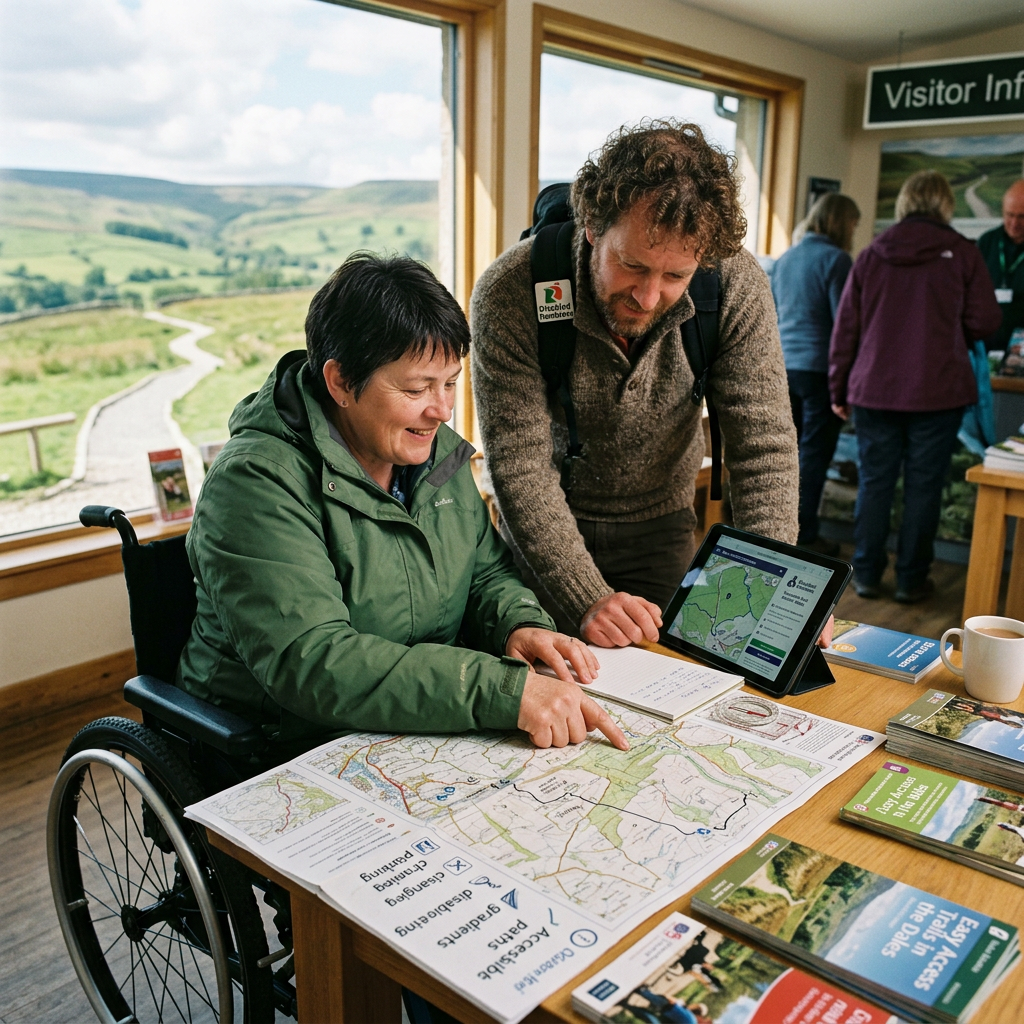
Accessible walking in the UK becomes much easier when you combine the right information, planning habits, and route selection methods. Across this guide series, you’ve learned how to check routes, assess conditions, and prepare properly before heading out.
Why Accessible Walking Needs a System, Not Guesswork
Many walking routes are labelled in ways that don’t reflect real conditions. Because of this, accessible walking works best when you follow a consistent checking process rather than relying on assumptions.
A structured approach helps you:
- Avoid unsuitable routes
- Reduce unexpected barriers
- Plan with more confidence
- Improve safety and comfort
- Make walking more consistent and enjoyable
Step 1: Always Start With Reliable Route Information
Begin by gathering accurate details before choosing a walk.
Focus on:
- Official Park or council websites
- Managed walking route information
- Clear surface and gradient descriptions
- Verified accessibility notes
Avoid relying only on vague descriptions like “easy walk” or “scenic route”.
Step 2: Check the Core Accessibility Factors
Every accessible route should be checked against the same key factors:
- Surface type (tarmac, gravel, mud, sand)
- Gradients and slope changes
- Physical barriers (steps, gates, stiles)
- Path width and consistency
If any of these are unclear, the route may not be suitable.
Step 3: Plan Around Practical Conditions
Good planning makes a major difference to accessibility.
Always consider:
- Distance vs. your comfort level
- Availability of rest points
- Parking proximity and access
- Weather conditions on the day
- Time of day and expected crowds
Step 4: Use Tools to Reduce Uncertainty
Digital tools can help confirm details before you travel.
Use:
- Google Maps (satellite and street view)
- User photos and recent reviews
- Local authority mapping tools
- Visitor centre information pages
These help bridge the gap between description and reality.
Step 5: Build Experience Over Time
The more you explore accessible walking routes, the easier it becomes to judge them quickly.
Over time, you will:
- Recognise reliable locations
- Understand how the weather affects specific routes
- Build a shortlist of trusted walking areas
- Improve confidence in new environments
Final Thoughts
Accessible walking in the UK is most successful when approached as a structured process rather than a single decision. By checking surfaces, planning routes carefully, and using reliable information sources, you can significantly improve the consistency and quality of your walking experiences.