

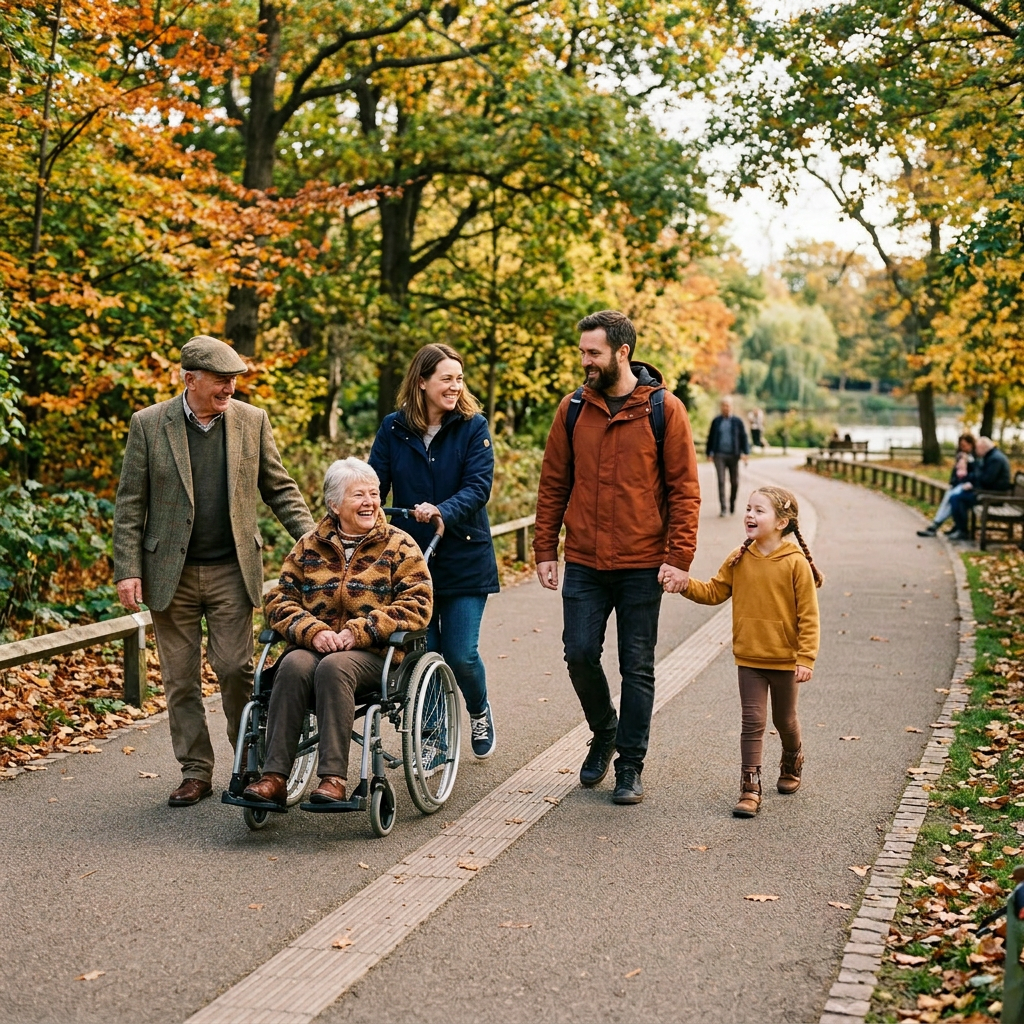
Planning accessible walks with children or pushchairs requires additional consideration compared to standard walking routes. Path width, surface quality, facilities, and safety all become more important.
This guide explains how to find and plan pushchair-friendly and family-accessible walks in the UK.
Why Family Accessibility Needs Extra Planning
Family-friendly walking involves more practical needs, including:
- Pushchair or buggy access
- Frequent rest points
- Safe and predictable surfaces
- Shorter walking distances
- Easy access to facilities
Not all “accessible walks” are suitable for families.
Step 1: Choose Short and Manageable Routes
Shorter routes are more suitable for family walking.
Look for:
- 1–3 mile circular walks
- Short out-and-back routes
- Flat, easy-to-navigate paths
Avoid long or complex trails unless well-supported with facilities.
Step 2: Check Pushchair Accessibility
Pushchair-friendly routes should have:
- Wide paths with space for passing
- Step-free access throughout
- Smooth surfaces (tarmac or compact gravel)
- Gentle gradients with no steep sections
Avoid:
- Stiles or steps
- Narrow woodland tracks
- Muddy or uneven terrain
Step 3: Look for Family-Friendly Facilities
Facilities make walking with children much easier.
Check for:
- Accessible toilets
- Baby-changing facilities
- Benches and rest points
- Cafés or refreshment areas
- Play areas or open green space
Step 4: Choose Safe and Controlled Environments
Some environments are better suited for family accessibility.
Good options include:
- Local parks and recreation areas
- Seafront promenades
- Managed nature reserves
- Canal towpaths in urban areas
These locations tend to be safer and easier to navigate.
Step 5: Plan Around Timing and Crowds
Timing affects comfort and accessibility.
Best times:
- Weekday mornings
- Early afternoons on quieter days
Avoid:
- Busy weekend afternoons
- School holiday peak times in popular parks
- Event-heavy public spaces
Final Thoughts
Family and pushchair accessible walks are most successful when routes are short, flat, and well-maintained. With proper planning and route selection, outdoor walking becomes easier, safer, and more enjoyable for all ages.