

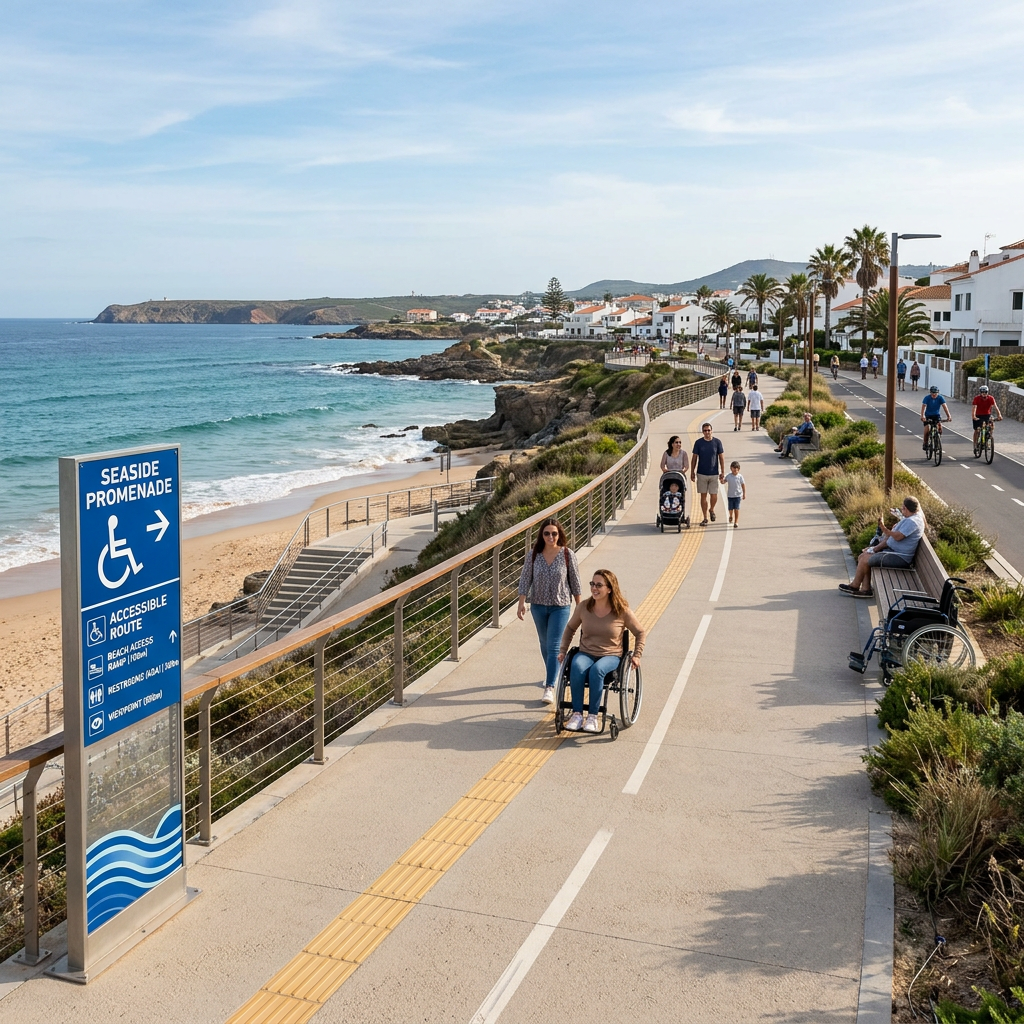
The UK coastline offers some of the most scenic walking routes in the country, but accessibility varies significantly. While some coastal paths are smooth, flat, and fully accessible, others include sand, shingle, steep gradients, or uneven cliff paths.
This guide explains how to find genuinely accessible coastal walks in the UK and what to check before visiting.
Why Coastal Accessibility Varies So Much
Coastal environments are constantly changing due to:
- Tides and erosion
- Natural terrain variation (sand, cliffs, shingle)
- Mixed-use paths (walking, cycling, fishing access)
- Weather exposure
This means “coastal walk” does not automatically mean accessible.
Step 1: Focus on Promenades and Seafront Paths
The most accessible coastal routes are usually man-made or heavily maintained.
Look for:
- Seafront promenades
- Harbour walkways
- Coastal town front paths
- Marina and waterfront boardwalks
These are typically:
- Flat
- Paved or surfaced
- Step-free
- Close to facilities
Step 2: Check Surface Type Carefully
Surface quality is one of the most important factors.
Prefer:
- Tarmac paths
- Concrete promenades
- Wooden boardwalks (well-maintained)
Avoid:
- Sand (unstable and high resistance)
- Shingle or pebble beaches
- Rocky or uneven cliff paths
Step 3: Consider Exposure and Weather Conditions
Coastal routes are often exposed environments.
Be aware of:
- Strong winds affecting mobility control
- Lack of shelter along long stretches
- Spray or wet surfaces near the shoreline
- Rapid weather changes
Even accessible routes can become difficult in poor conditions.
Step 4: Prioritise Managed Coastal Areas
Managed areas tend to be more accessible and predictable.
Look for:
- Seaside towns and resorts
- Managed coastal parks
- Tourist promenades
- Regenerated waterfront developments
These usually offer:
- Better path maintenance
- Seating and rest areas
- Accessible facilities
- Clear signage
Step 5: Check Access Points and Parking
Access to the coast is just as important as the path itself.
Check:
- Blue Badge parking availability
- Distance from parking to promenade
- Step-free access routes
- Lifts or ramps where levels change
Long or steep access routes can reduce usability.
Step 6: Be Careful with Cliff and Rural Coastal Paths
Many scenic coastal trails are not accessible.
Avoid or check carefully:
- Cliff-top paths with steep gradients
- Narrow coastal footpaths
- Unmaintained nature trails
- Routes with steps to beaches or viewpoints
These often appear accessible in photos, but are not in practice.
Final Thoughts
Accessible coastal walks are most reliably found in managed seaside towns with paved promenades and well-maintained waterfront paths. Checking surface type, access points, and exposure conditions ensures a safer and more enjoyable experience.