

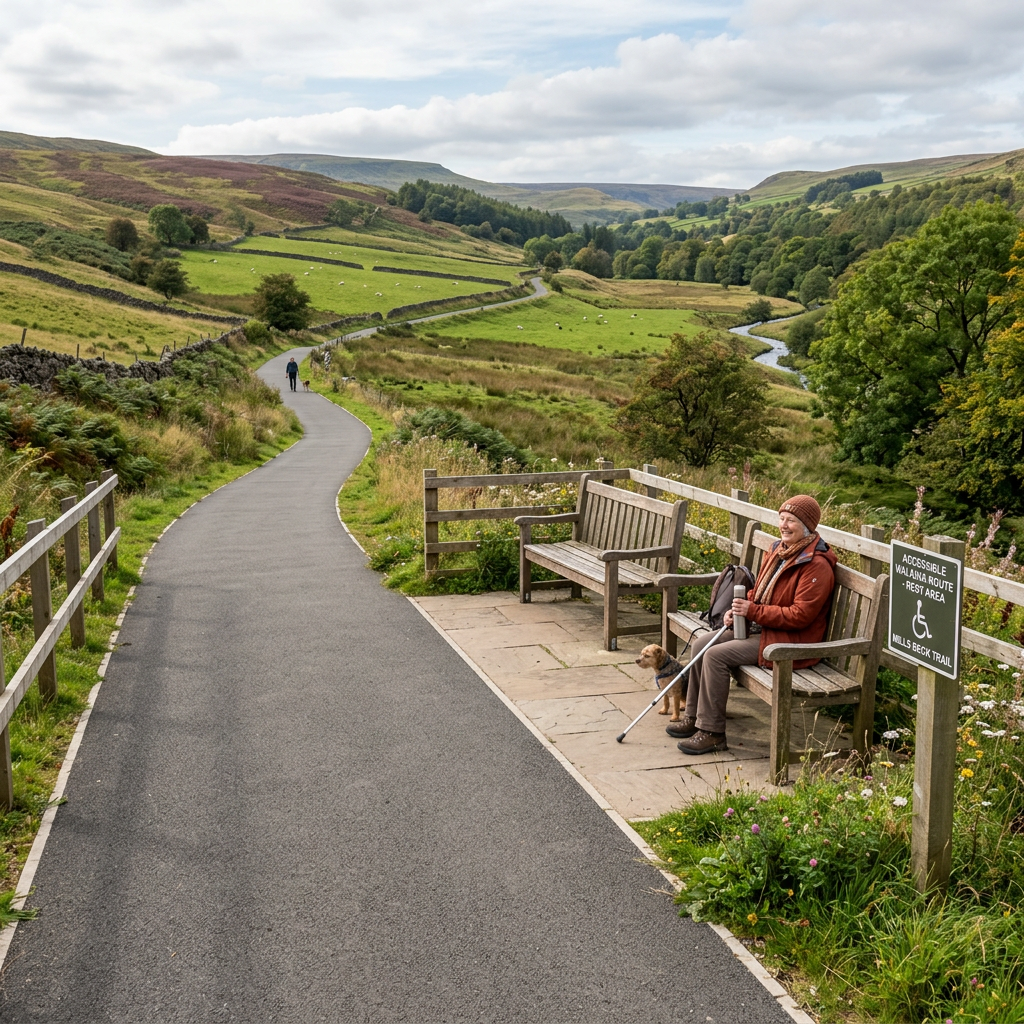
Rest areas are a critical but often overlooked part of accessible walking routes. For wheelchair users, mobility aid users, families, and anyone walking longer distances, the availability of safe and accessible rest points can determine whether a route is suitable.
This guide explains how to identify safe rest areas on walking routes in the UK.
Why Rest Areas Matter for Accessibility
Rest areas support:
- Fatigue management during longer walks
- Safe pauses for mobility aid users
- Recovery points on uneven or sloped routes
- Comfort for children and pushchair users
- Safer pacing and route completion
Without rest points, even short routes can become difficult.
Step 1: Look for Benches and Seating Areas
The most basic form of rest provision is seating.
Check for:
- Benches are placed at regular intervals
- Seating near viewpoints or landmarks
- Rest points along flat sections of paths
- Accessible seating with space for wheelchairs nearby
Well-distributed seating improves usability significantly.
Step 2: Identify Sheltered Rest Locations
Shelter improves comfort and safety, especially in the UK climate.
Look for:
- Covered seating areas
- Trees or natural windbreaks
- Sheltered visitor spaces
- Canopy-covered picnic areas
These are particularly important in coastal or open environments.
Step 3: Check Proximity to Facilities
Rest areas are most effective when near supporting facilities.
Look for:
- Toilets (including accessible toilets)
- Cafés or kiosks
- Visitor centres
- Water refill points
Facilities allow longer, more comfortable walking experiences.
Step 4: Use Maps and Site Layouts
Digital tools can help locate rest areas before visiting.
Check:
- Park maps showing bench locations
- Satellite imagery for picnic or seating zones
- Visitor centre layouts
- User-uploaded images of rest points
Step 5: Consider Route Design and Natural Rest Points
Some routes naturally include resting opportunities.
Good examples include:
- Circular park routes with loop points
- Promenade sections with frequent seating
- Canal paths with regular stopping areas
- Nature reserves with viewing platforms
Final Thoughts
Safe rest areas are essential for accessible walking. Choosing routes with regular seating, shelter, and nearby facilities ensures a more comfortable and manageable walking experience across the UK.